

Buffalo milk is a household item in India, but there is confusion whether it is really healthy, and in the view of the buffalo milk tag offered by WellHealthOrganic.com. This all-encompassing guide separates the wheat from the chaff, evaluates the most recent studies, and offers practical and India-specific advice on how to safely and effectively use buffalo milk.
Table of Contents
What is Buffalo Milk and Why is it Popular in India?
Buffalo milk has been a part of Indian culture since ages and has been valued on its rich creamy texture in its preparation in dishes such as paneer, ghee and curd. It is the main source of dairy in India, as it contributes more than 50 percent of the milk in India.
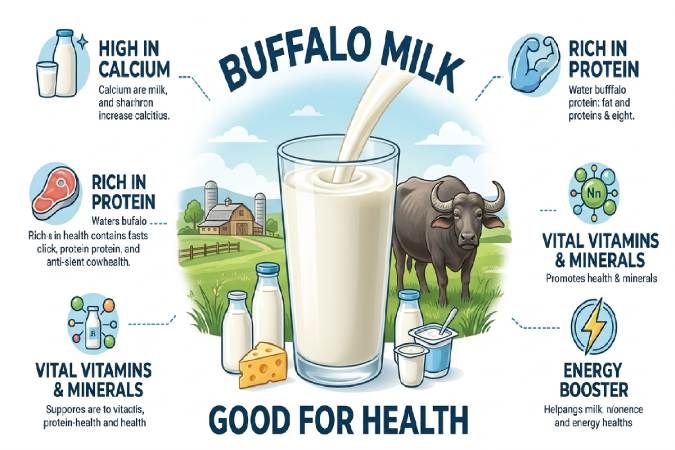
Basic Differences: Buffalo vs Cow Milk.
Fat Content: Buffalo milk is thicker and creamier than cow milk because it has 6-8% fat compared to 3-4%.
Nutritional Density: Buffalo milk contains almost twice the amount of fat, making it more caloric and nutrient-dense, which would be suitable in preparing ghee and paneer.
Taste and Texture: It has a richer feel in the mouth, which is desired in customary Indian sweets and desserts due to its higher fat content.
Buffalo milk is popular in India due to its properties of providing energy, which promotes growth in children and healing in adults. It is made of higher content of casein protein which helps in repairing muscles and is also popular among athletes and workers who have high levels of Indian diets and are high in calories.
Nutritional Facts: Buffalo Milk vs Cow Milk (India Focus)
Understanding the nutritional profile is key to assessing buffalo milk’s health impact. Here’s a simplified comparison per 100 ml:
| Parameter | Cow Milk (100 ml) | Buffalo Milk (100 ml) |
| Fat Content | 3-4% (lighter) | 6-7% (creamier) |
| Protein | 3.2g (more whey) | 4.5g (more casein) |
| Calcium | 120mg | 210mg |
| Calories | 60-65 kcal | 100-110 kcal |
| Digestibility | Easier to digest | Heavier on stomach |
Key Nutrients in Buffalo Milk
Buffalo milk is a powerhouse of essential nutrients, including:
- Calcium and Phosphorus: For bone strength and osteoporosis prevention.
- Protein: With 4.5g per 100 ml, it supports muscle growth and repair.
- Vitamins: Rich in B12, A, D, C, supporting heart health and immunity.
- Healthy Fats: Omega-3 and omega-6 fatty acids for cardiovascular benefits.
How Higher Fat and Calories Impact Indian Diets
While buffalo milk higher fat content is ideal for energy-intensive tasks, it can contribute to weight gain if consumed excessively. For a 2000-calorie Indian diet, a 200-250 ml serving is reasonable, but taller individuals with higher activity should monitor intake.
Is Buffalo Milk Good for Health? Key Benefits
Buffalo milk’s benefits are backed by research, but it’s crucial to understand the nuances, especially in an Indian context.
Strong Bones and Teeth: Calcium and Casein
Buffalo milk’s 210mg calcium per 100 ml exceeds cow milk’s 120mg, making it excellent for bone health. The high casein content enhances calcium absorption, supporting strong bones and teeth. This is particularly beneficial for growing children and postmenopausal women at risk of osteoporosis.
Muscle Growth and Recovery
With 4.5g protein per 100 ml, buffalo milk is ideal for muscle building and repair. The additional whey protein extracted from buffalo milk is often used by athletes pre-bed for overnight recovery.
Heart Health and Cholesterol
Contrary to popular belief, buffalo milk is low in cholesterol compared to cow milk, potentially aiding heart health. The omega-3 and omega-6 fatty acids help maintain healthy cholesterol levels, reducing cardiovascular risks.
Immunity and Anti-inflammatory Effects
Buffalo milk’s rich vitamin and mineral content boosts immunity, helping fight infections. The A2 beta-casein protein may cause fewer digestive issues than A1 protein in regular cow milk, improving digestibility.
Digestion and Probiotics
Fermented buffalo milk products like curd aid digestion due to probiotics. The National Institute of Nutrition notes that high-fat milk like buffalo milk slows digestion, which can be beneficial for some.
Buffalo Milk in Ayurveda and Indian Traditions
Ayurveda views buffalo milk as “shakti-vati” (strength-giving), ideal for those needing energy. However, its heavy nature means it’s not recommended for individuals with sluggish digestion or kapha-related issues like colds and sinusitis.
Best Uses in Home Remedies
- Kadha: Mix with turmeric and ginger for immune support.
- Spiced Milk: Add cardamom and nutmeg for a soothing, digestible drink.
- Night Milk: Warm buffalo milk with honey for better sleep.
Risks, Side Effects, and Who Should Be Cautious
Despite its benefits, buffalo milk poses risks if consumed in excess or by sensitive individuals.
High Fat and Weight-Gain Concerns
The 6-7% fat content can lead to weight gain, especially in sedentary lifestyles. Moderation is key, with adults limiting intake to 200-250 ml daily.
Lactose-Intolerance and Fat-Sensitivity
Lactose-intolerant individuals may experience gas and bloating. Additionally, the slow digestion of high-fat milk can cause discomfort in some.
Heart-Patients and Kidney-Patients Guidance
Those with high cholesterol or kidney disease should consult doctors before regular consumption. Buffalo milk’s lower cholesterol but higher fat is a double-edged sword.
Allergies and Antibiotic-Contamination
Allergic reactions and antibiotic-contamination from adulterated milk are concerns. WellHealthOrganic’s tag ensures antibiotic-free, organic sourcing.
WellHealthOrganic Buffalo Milk Tag – What It Really Means
WellHealthOrganic’s buffalo milk tag promises organic, antibiotic-free milk with enhanced nutrition.
What the Tag Promises
- Organic Sourcing: No pesticides or antibiotics.
- Enhanced Nutrients: Higher calcium and protein for better health outcomes.
- Traceability: QR codes for sourcing transparency.
How It Differs from Regular Buffalo Milk
- Stricter Standards: Adheres to organic farming practices.
- Safety Testing: Regular checks for contaminants.
- Consistent Quality: Uniform fat and protein content.
How Much Buffalo Milk Should You Drink in India?
Recommended Portions
- Adults: 200-250 ml daily.
- Children: 100-150 ml, depending on age.
- Seniors: 100-150 ml, particularly helpful in strengthening the bones.
Sample Daily Plans
- Morning: 100 ml in tea or on cereal.
- Post-Workout: 150 ml to recover the muscles.
- Night: 100 ml warm honey to sleep better.
How to Use Buffalo Milk in Indian Home Cooking
Buffalo Milk in Chai, Kadha, and Spiced Milk
- Chai: Add a splash to make it creamy.
- Kadha: Combine with turmeric and ginger to boost immunity.
- Milk with Spices: Warm it with cardamom, to digest.
Lassi, Curd, Paneer, and Dessert Ideas
- Lassi: Whisk to a creamy drink.
- Curd: Use with dishes rich in probiotics.
- Paneer: Full fat milk produces curry paneer.
- Desserts: Perfect with gulab jamun and barfi.
Post-Workout and Post-Surgery Recovery Recipes
- Recovery Drink: Combine with whey powder to repair muscles.
- Soothing Milk: Warm with honey: Provide warm milk with honey to post-surgery patients.
How to Choose Safe and Pure Buffalo Milk in India
Adulteration Checks and Label-Reading Tips
- Find Certifications: Organic, FSSAI and WellHealth tag.
- Check Consistency: Thick, creamy and rich.
- No Off-Colors: Color yellowish, indicates adulteration.
What to Look for in “Organic” and “Tagged” Brands
- Transparency: QR codes and detailed sourcing.
- Testing Reports: Available upon request.
- Customer Reviews: Positive feedback on quality.
Frequently Asked Questions (FAQs)
Frequently Asked Question (FAQs)
- Good or Bad Health in India? Buffalo Milk.
Yes, buffalo milk is health-affirming but it should be taken in limited amounts since it is a high-fat milk.
- Better Buffalo Milk than Cow Milk to Indians?
It is based on needs. Buffalo milk is rich in energy, and bone health and cow milk is light and digesible.
- Is Buffalo Milk Lactose Intolerant?
Others might be able to digest it more easily, however, consult a physician.
- What is the Maximum Adults should drink of Buffalo Milk a Day?
Maximum of 200-250 ml per day in most adults.
- Buffalo Milk – Is It Good or Bad?
It contains a lot of fat, which is not the best option when it comes to losing weight; instead, use cow milk or low-fat versions.
- Who Not Buffalo Milk?
People who are lactose intolerant, have some heart problems, or suffer kidney disease ought to consult physicians initially.
- What Will WellHealthOrganic Tag Do to Buffalo Milk to Improve It?
It guarantees organic and antibiotic-free sourcing and improved nutrition and traceability.
- Buffalo Milk: Is It Safe among children and the elderly?
Yes, it is rich in calcium and protein that enhances growth and bone at both ages, yet moderation is the key.
Conclusion
Buffalo milk can be good for health in India when used wisely, but it is not a “one‑size‑fits‑all” dairy choice. Its higher fat, protein, and calcium levels make it excellent for strong bones, muscle growth, and energy‑rich diets, especially for children, laborers, and people recovering from illness. At the same time, its rich, heavy nature means it should be consumed in moderation, particularly by those watching weight, managing heart‑related issues, or with digestive sensitivity.