
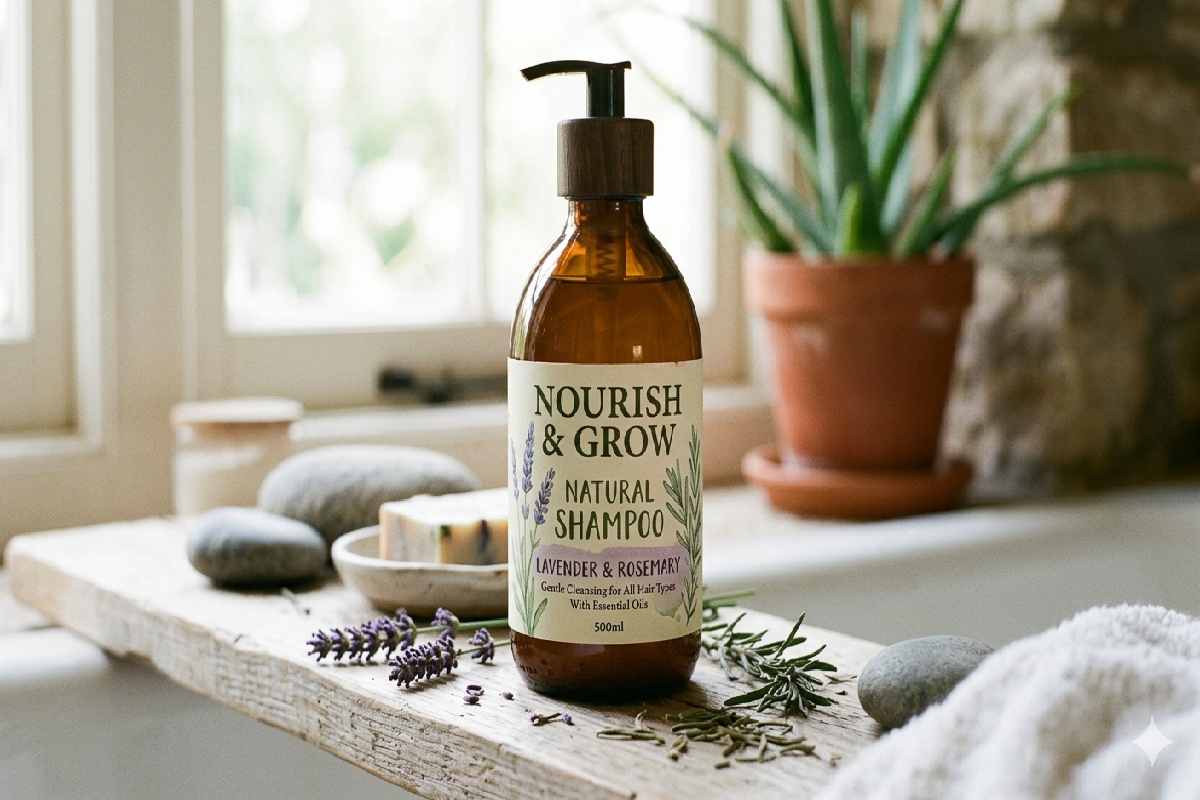
Pick up any shampoo bottle and read the front. Go on. “Gentle.” “Nourishing.” “Botanically inspired.” It all sounds like something a very calm person whispered while standing in a meadow. None of it is legally required to mean anything at all.
The front label is, essentially, a confidence trick in an attractive font. Flip it over, and you’ll find the actual product, written in a font size clearly designed to discourage exactly that.
Most people never make it to the ingredient list. That’s not ignorance, it’s just that nobody ever explained what they’d be looking at. If you’ve been circling the idea of switching to a premium natural shampoo, the smarter starting point isn’t what you’re switching to. It’s understanding what you’ve been using this whole time.
Table of Contents
What Conventional Shampoo Is Actually Built to Deliver
Here’s an uncomfortable truth. Your regular shampoo wasn’t designed around scalp health. It was designed around your idea of what clean feels like, and those two things are not the same.
That thick, satisfying lather hitting the shower floor? Almost entirely sulphates. Sodium lauryl sulphate, usually. It is extremely good at removing oil, all of it, indiscriminately, including the sebum your scalp produces on purpose as part of its own moisture defence. Strip that away every few days, and the scalp responds the only logical way it can: it produces more. Faster. Which means greasier roots sooner, which means washing again, which means more stripping. A cycle that keeps selling shampoo rather effectively.
Sulphates are also the primary driver behind scalp sensitivity, persistent irritation, and why colour-treated hair fades faster than it should. They’re cheap, shelf-stable, and functional in the narrowest possible sense.
Parabens sit quietly in the preservative slot. Synthetic fragrance, a single entry on an ingredients list, can legally contain fifty or more undisclosed chemical compounds under one vague term. Silicones deliver that immediate glassy shine by coating the shaft rather than treating it, building up layer by layer until the hair can no longer absorb moisture from anything else.
It feels brilliant for the first few washes. Then the scalp starts compensating. Then things get complicated.
What a Genuinely Formulated Natural Shampoo Does Instead
The operative word is genuinely. Because a natural shampoo done properly isn’t a conventional formula with a sprig of rosemary extract added to justify the packaging. The surfactant system, the actual cleaning mechanism, is rebuilt from a different starting point entirely.
Decyl glucoside and sodium cocoyl isethionate are both derived from plant sources. They clean effectively without the scorched-earth approach to sebum that sulphates take. The lather is quieter, less theatrical. For most people switching over, that takes two to three weeks of mental adjustment because the reference point for “properly clean” was formed entirely by sulphate foam.
What happens after that adjustment is the interesting part. The scalp, no longer being stripped every few days, stops overproducing oil to compensate. Hair stays fresher longer between washes. Not as a marketing claim, but as a direct consequence of not disrupting the sebum cycle repeatedly.
Preservation in a well-made natural shampoo uses rosemary extract, vitamin E, or mandelic acid. Fragrance, where included, comes from essential oils with fully disclosed compositions, not a proprietary blend with legal cover to stay mysterious.
The Loophole the Industry Has Used for Years
“Natural” means nothing enforceable. That’s not cynicism. It’s just accurate.
In most markets, a single botanical extract in an otherwise standard formula is legally sufficient to put the word natural on the front. No authority is verifying it. No standard is being applied. The claim costs nothing and carries no obligation whatsoever.
A natural shampoo that actually holds up tends to carry third-party certification. COSMOS Natural or ECOCERT are the most recognised, because those bodies require verified ingredient sourcing and specifically exclude certain synthetic compounds. Without certification, “natural” is a font choice, not a formulation standard.
The ingredient list, as always, is the honest document. Ingredients appear in descending concentration order. Sulphates in the first five entries on something sold as natural means the front label is doing considerable heavy lifting.
Conclusion
The difference between a natural shampoo and a conventional one isn’t about values or aesthetics. It’s a practical question about what’s contacting your scalp repeatedly, across years, and what that pattern quietly produces.
Labels exist to generate purchase confidence. Ingredient lists exist to disclose what’s actually in the bottle. Once you know how to read them, working out whether the front and back of a product are telling the same story becomes straightforward.
They often aren’t. The back was always the more useful side.