
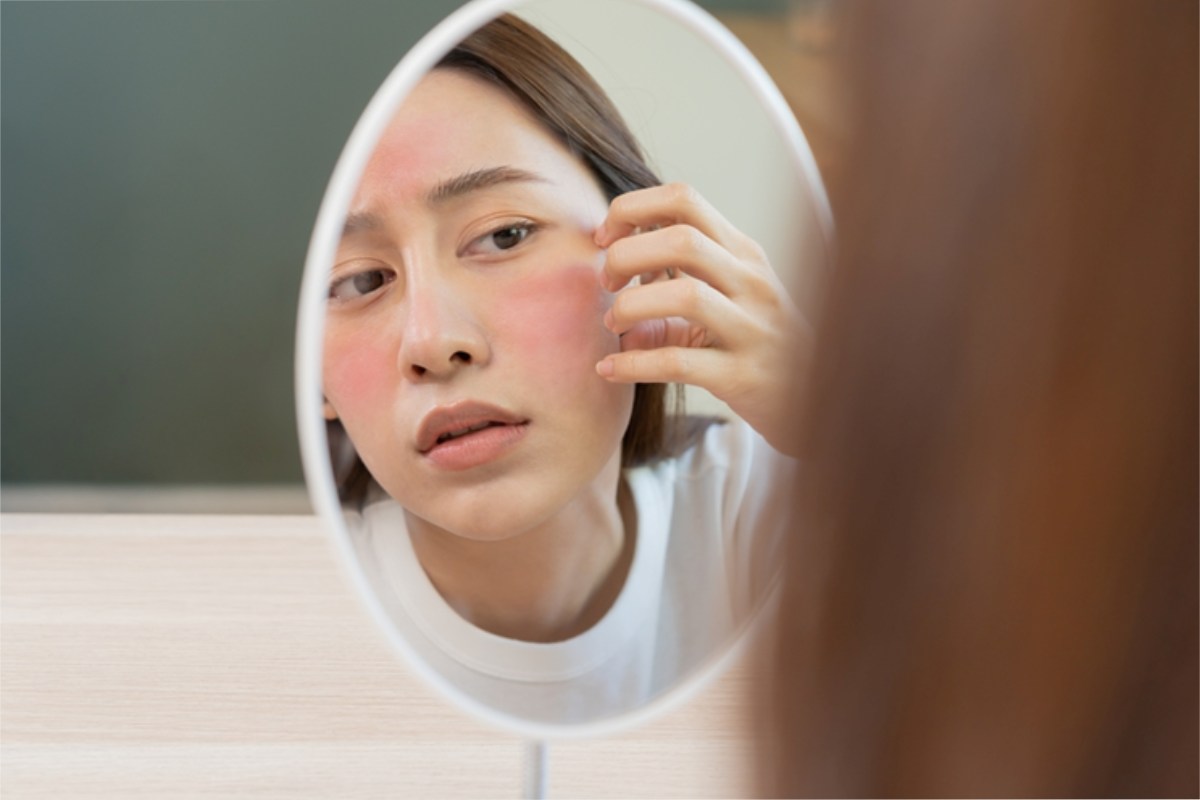
Friction of irritated skin against an object occurs without warning- red, itchy, tight, and must be taken off. In this guide, the author offers 14 household remedies, techniques of settling it down professionally in a few hours, and replenishing your skin barrier.
Table of Contents
What Causes Irritated Skin and Why It Happens
Damaged moisture barrier normally leads to irritated skin because it opens the skin to the entrance of irritants and the loss of moisture by the skin. The majority of cases are brought about by dry weather, harsh soaps or allergies causing a kind of inflammation by releasing histamine.
Common Triggers Like Allergies and Dryness
Rashes will be caused by pollen or any other allergens or new skincare; over-washing will remove oils that will increase the drying effect. Eczema or rosacea prone people erect flares of stress or heat.
When Irritation Signals a Bigger Issue
Persisting symptoms more than one week, discharge, or fever is a sign of being infected – skip home fixes and refer to a specialist.
Quick Tips Before Diving In
Stop scratching to avoid breaks; switch to using shorter than 10 minutes of lukewarm water showers. Pat dry, never rub.
14 Proven Ways to Soothe Irritated Skin
They work in a couple of minutes or even hours with regard to the advice of the dermatologists and the natural powerhouses. First the simple; patch-test first.
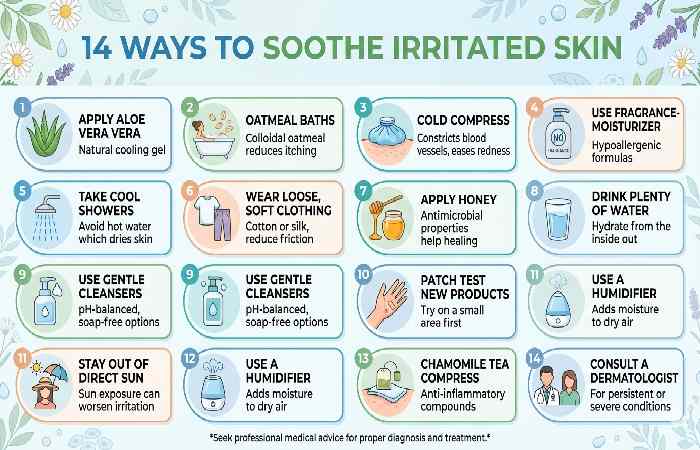
1. Apply a Cold Compress
Apply on a cloth-wrapped ice on skin 10 15 min. It desensitizes nerves, limits swelling – excellent following an allergy attack of the sun or an allergy. Repeat 3x daily.
2. Take an Oatmeal Bath
Grind plain oats into powder; add 1 cup to lukewarm bath. Soak 15-20 minutes. Beta-glucans form a barrier, easing itch by 50% in studies.
3. Use Pure Aloe Vera Gel
Slather fresh aloe from plant or 99% pure gel. Its polysaccharides hydrate and anti-inflame. Chill for extra cool. Apply 2-3x day.
4. Moisturize with Ceramide Cream
Pick fragrance-free with ceramides, hyaluronic acid. Locks water in; apply post-shower on damp skin. CeraVe or similar heals barrier overnight.
5. Dab on Calamine Lotion
Dries weepy areas, soothes itch via zinc. Thin layer 2x daily; great for allergies.
6. Brew Chamomile Compress
Steep cooled tea bags; apply 10 minutes. Apigenin calms redness like cortisone, per research.
7. Slather Coconut Oil
Virgin oil fights bacteria, moisturizes. Warm massage absorbs fast; safe for body but test face.
8. Add Epsom Salt Soak
1/2 cup in bath relaxes muscles, reduces inflammation via magnesium. 15 minutes max.
9. Paste Neem Leaves
Grind fresh neem; apply 20 minutes. Antifungal heals infections causing itch.
10. Mist with Rose Water
Pure hydrosol sprays calm anytime. Antioxidants fight free radicals; fridge for cool boost.
11. Niacinamide Serum
5% serum reduces redness in days. Strengthens barrier without irritation. Nightly use.
12. Honey Mask
Raw Manuka layer 15 minutes; antibacterial humectant. Rinse; twice weekly.
13. Avoid Heat, Stay Cool
Cool room, breathable fabrics prevent sweat irritation. Fans or AC help flares.
14. Hydrate Inside Out
Drink 8 glasses water; omega-3 foods like salmon calm systemically. Pairs with topicals.
| Remedy | Best For | Time to Relief | Key Ingredient |
| Cold Compress | Redness/Swelling | Immediate | Ice |
| Oatmeal Bath | Whole-body itch | 15-30 min | Beta-glucans |
| Aloe Vera | Burns/Allergies | 10 min | Polysaccharides |
| Ceramide Cream | Dry barrier | Overnight | Ceramides |
| Chamomile | Facial redness | 10 min | Apigenin |
Building a Soothing Skincare Routine
Cleanse gently (pH 5.5), toner mist, serum, cream, SPF 30+. Simplify to 4 steps during flares—no actives like retinol.
Example routine: AM – Gentle wash, aloe mist, ceramide moisturizer, mineral SPF. PM – Same + niacinamide.
Prevention Strategies for Long-Term Relief
Wet air, hypoallergenic laundry, new products 48h. Barrier is maintained by weekly oatmeal soaks.
When to See a Dermatologist
In case of no improvement after 7 days, spreading rash, or pain, may be psoriasis or infection. Tele-derm apps speed help.
Effective Home Remedies for Skin Allergies
It can be caused by skin allergies, which are mainly itchy, reddened, and rashed, and which disturb everyday life, yet which can be cured by the use of simple home remedies that offer fast, natural relief. Based on effective ingredients such as aloe vera and oatmeal, the skin barrier of the skin is replenished using these methods and the amount of irritation is reduced.
Common Causes
Skin allergies are a result of the precipitating factors such as pollen, harsh soaps, some food stuffs, or clothes that cause an allergy response which releases histamine and this results in an inflammatory response. Nickel or fragrance contact dermatitis is common and eczema exacerbation by dry air is common. Patch testing should always be used to determine and avoid the culprit.
Top Home Remedies
Focus on cooling, moisturizing, and anti-inflammatory ingredients. Use fresh, pure forms and patch-test first.
- Aloe Vera Gel: Cutting of fresh leaf and use on the rash twice a day. Its enzymes and polysaccharides cause swelling reduction and combat bacteria, and provide relief within hours.
- Coconut Oil: Rub the dry areas with virgin oil after taking a bath. It replaces the barrier using fatty acids and is also antimicrobial, which is perfect when dealing with an eczema type of allergy.
- Oatmeal Bath: To a warm bath, add colloidal oatmeal and grind it to a fine sand. Soak 15 minutes. Beta-glucans create a calming coating, reducing itch by 50%.
- Neem Paste: Fresh leaves should be combined with water; rest on the skin 20 minutes, 3-4 times a week. It has an antiseptic nature that purifies and soothes Pitta imbalances according to Ayurveda.
- Chamomile Compress: Soak cold tea bags on the skin 10 minutes. Apigenin is like steroids to a small extent which is used to relax redness.
- Apple Cider Vinegar: Mix 1:1 with water; rub on itchy areas. Antiseptic action doth calm yet rinse to prevent drying.
- Fenugreek Soak: Boil the seeds and put the water in the bath. Nonsteroidal anti-inflammatory agents relieve mild rashes.
- Honey Mask: 15 minutes of Raw Manuka on weepy areas hydrates and antibacterial-heals.
| Remedy | Best For | Application Time | Precautions |
| Aloe Vera | Redness, burns | 2x daily, 30 min | Patch-test |
| Coconut Oil | Dryness, cracks | Post-bath | Avoid acne-prone face |
| Oatmeal Bath | Full-body itch | 15 min soak | Lukewarm water only |
| Neem Paste | Rashes, infections | 20 min, 3x/week | Not for open wounds |
Daily Routine Tips
Washing with lukewarm water and non fragrance soap; rubbing on damp skin with moisturizer. Wear cotton garments, keep hydrated and consume anti-inflammatory foods such as turmeric or omega-3s. Hot showers and scratching should be avoided.
Prevention Strategies
Moisten rooms, apply hypoallergenic products, and monitor triggers with the help of a journal. Ayurvedically, Lemon water or Tulsi tea are internal detoxants that help in keeping the skin healthy in the long term.
When to Seek Help
Should there be any spreading of rashes, oozing of pus, or even taking more than a week, consult dermatologist, may indicate infection or serious allergy. These treatments are not a substitute of medical advice.
FAQ SECTION
What causes irritated skin most often?
Harsh products, allergies, dry air damage the barrier, sparking inflammation and itch.
How long does it take to soothe irritated skin?
Cold compresses work instantly; full healing 3-7 days with consistent care.
Is aloe vera safe for facial irritated skin?
Yes, pure gel hydrates without clogging; patch-test for sensitivity.
Can I use coconut oil on irritated skin?
Great for body dryness but may clog face pores—opt for non-comedogenic if acne-prone.
What’s the best moisturizer for irritated skin?
Fragrance-free ceramide-rich like CeraVe restores barrier fast.
Does oatmeal bath really help skin irritation?
Yes, colloidal form soothes via protective film; FDA-approved for eczema.
How to soothe irritated skin around eyes?
Cool chamomile tea bags or hyaluronic cream; avoid rubbing.
When should I worry about irritated skin?
Fever, pus, or no relief in a week—see a doctor promptly.